

Utilizing clinical pathways to help improve patient outcomes and manage the cost of oncology care
2025年7月2日
Discover how ClinicalPath is helping Cone Health Cancer Center improve patient outcomes and manage costs. Integrated seamlessly into the EHR and clinical workflows, ClinicalPath supports over 97% of common cancer cases in medical and radiation oncology.
Key highlights from a multi-year study of 6,700+ patients include:
Patients treated on ClinicalPath were half as likely to die within 3, 6, or 12 months.
Significant financial benefits with higher reimbursements and improved margins.
Reduced care variation, leading to more predictable outcomes and costs.
Positive clinician experiences fostering collaboration and better care delivery.
It’s an exciting time to be in oncology as scientific advancements are being made at a rapid pace. However, this makes it challenging for your oncologists to stay up to date with the latest developments in the field. This often results in unintended variability and increased costs.
Cancer centers need predictability to succeed. With predictable treatment decisions, cancer centers can drive predictable outcomes and costs.
ClinicalPath places evidence-based oncology pathways and clinical trial support within the workflow, empowering patient-focused treatment decisions. This supports hospitals in improving patient outcomes and reducing healthcare costs.
Collaboratively developed by a committee of national academic and community oncologists, ClinicalPath covers over 97% of the most common cancer cases in medical and radiation oncology.
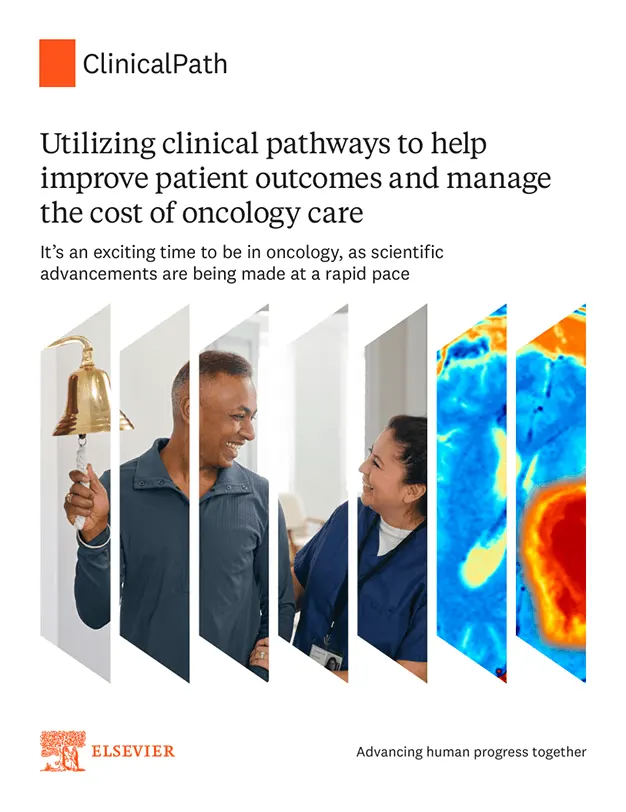
Utilizing clinical pathways to help improve patient outcomes and manage the cost of oncology care
Download white paperIn 2016, ClinicalPath was implemented at Cone Health
A private, not-for-profit integrated healthcare network in North Carolina, consisting of five hospitals and several ambulatory care centers, outpatient surgery centers, physician practices, a retirement community and urgent care centers. The healthcare network is also home to the Cone Health Cancer Center, a 921-bed comprehensive cancer center, where ClinicalPath is utilized.
The cancer center embedded ClinicalPath into clinical workflows to help achieve three goals:
Reduce care variation
Reduce cost of care
Help improve patient outcomes
Study aim and method
To explore the effectiveness of reducing care variation with thoughtfully implemented tools, a retrospective cohort study design was used to ascertain outcomes related to use of the ClinicalPath decision support tool in Epic (exposed) versus no use of the tool (not exposed).
Study design
Cone Health Cancer Center looked at both costs and outcomes for more than 6,700 patients who were treated between 2017 and 2022. Of those initial patients, the researchers compared 1,810 diagnosed and staged cases of cancer for which providers followed the ClinicalPath treatment recommendations during treatment against 4,095 cases for which the recommendations were either not used or not followed through to completion.¹
Removing study biases
509 patients were matched across both experimental conditions by the year the cancer was diagnosed, site of the cancer, clinical stage, goal of treatment and other disease comorbidities to control for outside variables that might skew the results.¹
Patient survival results
The group of patients documented as on-pathway in ClinicalPath were half as likely to die within 3, 6 or 12 months of treatment.
Cancer patients were more likely to survive all the way through 12 months if their oncologist managed care with decision support from ClinicalPath pathways.¹
Improved contribution margins
Cone Health was more likely to be reimbursed for prescribing relevant, evidence-based care. That meant the integrated health network was seeing significant financial benefits when ClinicalPath was used versus when it wasn’t.¹
74%
The average contribution margin increase when oncologists used ClinicalPath to guide treatment.¹
Study conclusion
ClinicalPath can help support oncologists to improve outcomes for oncology patients and manage the cost of care.
Moving forward
Now that the study has concluded, many of the oncologists at Cone Health have adopted ClinicalPath as a part of their regular care workflow.
Using ClinicalPath and collaborating with Elsevier has been a positive experience for both clinicians and patients. Patient-centric focus is of utmost importance.Timothy Finnegan
MD, Chief of Oncology, Cone Health Cancer Center
Sources
Reference: Schmidt, M. 2023. The impact of using Elsevier ClinicalPath oncology treatment pathways on survival and cost of care. [Poster]. ASCO Annual Conference, 2-6 June, McCormick Place. Available from: https://meetings.asco.org/abstracts-presentations/221866